
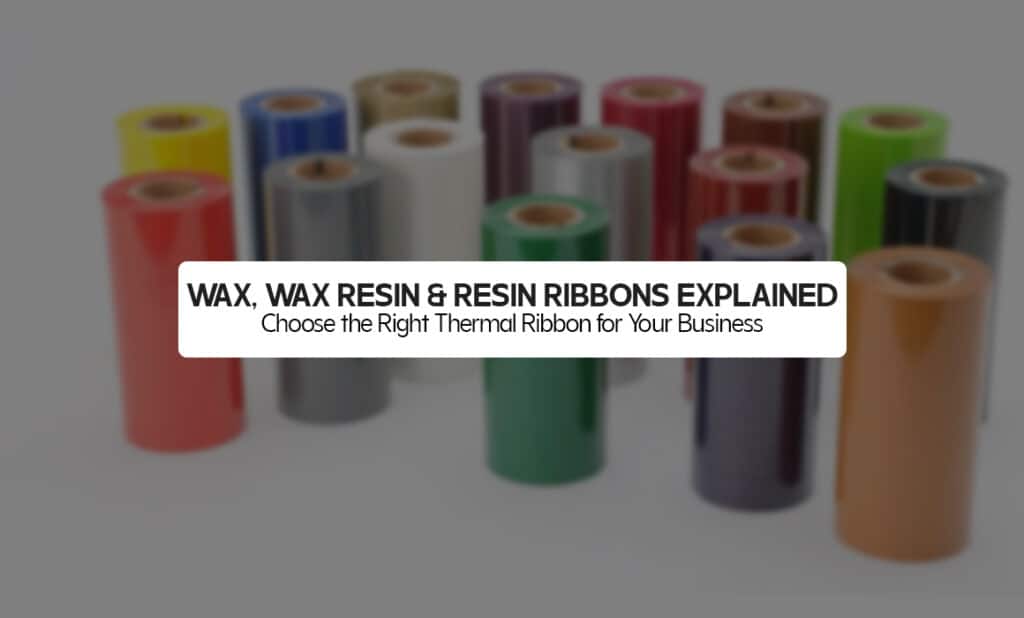
Thermal barcode printing depends heavily on one critical component that many businesses often overlook: the thermal transfer ribbon. While barcode printers and scanners receive most of the attention, the ribbon plays a major role in determining print quality, durability, and long-term performance of barcode labels. Choosing the wrong ribbon can result in faded prints, scanning errors, frequent reprints, and higher operational costs.
In Pakistan’s retail, logistics, and manufacturing sectors, businesses use barcode labels in environments ranging from air-conditioned stores to hot, dusty warehouses. This makes it essential to understand the differences between wax, wax resin, and resin ribbons. Each ribbon type is designed for specific applications, label materials, and environmental conditions. Selecting the correct option ensures that barcode labels remain readable throughout their lifecycle.
This detailed guide explains how wax, wax resin, and resin ribbons work, where each type is best used, and how businesses can make the right decision for their barcode printing needs.
What Is a Thermal Transfer Ribbon?
A thermal transfer ribbon is a roll of coated film used in thermal transfer barcode printers. During printing, heat from the printer’s printhead melts the ribbon coating and transfers it onto the label surface. The quality of this transfer determines how sharp, durable, and scannable the barcode will be.
Thermal transfer ribbons are widely used because they produce long-lasting prints compared to direct thermal printing. They are ideal for businesses that require labels to withstand handling, transportation, and environmental exposure.
Understanding the Three Main Types of Thermal Ribbons
Thermal transfer ribbons are categorized based on the composition of their ink coating. The most common types are wax, wax resin, and resin ribbons. Each type offers a different balance between cost, durability, and resistance.
Wax Ribbons: Cost-Effective and Widely Used
Wax ribbons are the most commonly used thermal ribbons in barcode printing. They are popular because of their affordability and compatibility with a wide range of barcode printers.
Wax ribbons are best suited for paper labels and are commonly used in retail stores, offices, and short-term labeling applications. These ribbons melt at lower temperatures, which helps extend the life of the printer’s printhead.
Although wax ribbons produce clear and sharp prints, they offer limited resistance to heat, moisture, and abrasion. This makes them ideal for labels that are used indoors and for a short period.
Where Wax Ribbons Perform Best
Wax ribbons are often used for price tags, shipping labels, carton labels, and inventory tags that do not require long-term durability. Many small businesses prefer wax ribbons because they offer reliable printing at a lower cost.
Wax Resin Ribbons: A Balance of Quality and Durability
Wax resin ribbons combine wax and resin materials to create a stronger ink coating. This blend provides better resistance than standard wax ribbons while still maintaining cost efficiency.
Wax resin ribbons produce darker and more durable prints, making them suitable for semi-gloss paper and some synthetic labels. These ribbons are widely used in warehouses, logistics centers, and distribution hubs where labels face light abrasion and occasional moisture.
In Pakistan’s supply chain and warehousing sector, wax resin ribbons are often preferred because they offer improved durability without the higher cost of resin ribbons.
Why Businesses Choose Wax Resin Ribbons
Wax resin ribbons are a practical choice for businesses that need longer-lasting labels but do not operate in extreme conditions. They help reduce reprinting costs and improve scanning accuracy during transportation and storage.
Resin Ribbons: Maximum Durability for Harsh Environments
Resin ribbons are designed for the most demanding applications. They use a high resin content that bonds strongly with synthetic label materials. This results in extremely durable barcode labels that resist heat, chemicals, scratches, and moisture.
Resin ribbons are commonly used in manufacturing, healthcare, electronics, and chemical industries. They are ideal for product identification, asset tagging, and compliance labeling where label failure is not an option.
Although resin ribbons are more expensive than wax and wax resin options, they provide long-term value by reducing label replacement and downtime.
Choosing the Right Ribbon Based on Label Material
The type of label material used plays a major role in ribbon selection. Paper labels work well with wax and wax resin ribbons, while synthetic labels such as polyester or polypropylene require resin ribbons for proper adhesion.
Using an incompatible ribbon can lead to poor print quality and scanning issues. Businesses should always match ribbon type with label material to achieve optimal results.
Environmental Factors That Affect Ribbon Selection
Environmental conditions such as temperature, humidity, and exposure to chemicals directly affect barcode label performance. In hot or humid environments, wax ribbons may fade quickly, while resin ribbons maintain print integrity.
For outdoor labeling or industrial use, resin ribbons provide the best protection. Warehouses and logistics operations often rely on wax resin ribbons to handle moderate exposure.
Print Quality and Scanner Performance
Barcode scanners rely on clear contrast between the printed barcode and label background. Low-quality ribbons can result in uneven printing, which affects scanner readability.
High-quality thermal ribbons ensure consistent ink transfer, sharp edges, and reliable scanning. This improves checkout speed, inventory tracking, and overall operational efficiency.
Ribbon Compatibility with Barcode Printers
Not all ribbons are compatible with every barcode printer. Printer settings such as heat level and print speed must be adjusted according to ribbon type. Using the correct ribbon ensures smooth operation and extends printer lifespan.
Reliable suppliers like Thermal Expert guide businesses in selecting ribbons that match printer models and application requirements.
Cost vs Performance: Making the Right Decision
While wax ribbons are cost-effective, frequent reprints can increase long-term expenses. Wax resin ribbons offer a balance between cost and durability, while resin ribbons deliver maximum performance for critical applications.
Businesses should consider total cost of ownership rather than just ribbon price. Choosing the right ribbon reduces maintenance, reprints, and downtime.
Comparison Table: Wax vs Wax Resin vs Resin Ribbons
| Ribbon Type | Durability | Best Label Material | Ideal Applications |
| Wax | Low | Paper labels | Retail, shipping |
| Wax Resin | Medium | Semi-gloss, synthetic | Warehousing, logistics |
| Resin | High | Synthetic labels | Manufacturing, healthcare |
Industries That Benefit from Proper Ribbon Selection
Retail businesses rely on wax ribbons for price and shelf labels. Warehouses and logistics companies often choose wax resin ribbons for shipping and inventory labels. Manufacturing units depend on resin ribbons for compliance and asset tracking.
Selecting the right ribbon improves workflow efficiency and ensures barcode reliability across all stages of operation.
Frequently Asked Questions
What is the most affordable thermal ribbon option?
Wax ribbons are the most cost-effective option for general barcode printing needs.
Which ribbon lasts the longest?
Resin ribbons provide the highest durability and resistance.
Can one ribbon type be used for all labels?
No, ribbon selection should match label material and environmental conditions.
Are wax resin ribbons suitable for warehouses?
Yes, they are widely used in warehouse and logistics operations.
Do resin ribbons work on paper labels?
Resin ribbons are designed for synthetic labels and may not perform well on paper.
Conclusion
Understanding the difference between wax, wax resin, and resin ribbons helps businesses choose the right thermal printing solution for their needs. Each ribbon type serves a specific purpose, from cost-effective retail labeling to high-durability industrial applications. Selecting the correct ribbon improves print quality, scanning accuracy, and overall efficiency while reducing long-term costs. Businesses that invest in the right ribbon technology gain better control over their barcode operations and ensure reliable performance across all environments. Trusted suppliers such as Thermal Expert play an important role in helping organizations choose solutions that match their operational requirements.
